The body speaks in signals the mind does not need to interpret intellectually

The mat is cold. Breath rises, falls, subtle, uneven. Attention drifts, tracing the smallest shift in the space. A stimulus appears—barely visible—but it pulses through the body, through every fibre. Reaction arises as a fragment. If held, it isolates. If processed, it distributes. 

The system can fracture, isolate, hold in one spot. Or it can flow, harmonised through posture, breath, and alignment. Reaction is optional, or at least isolating it is.

Pressure comes. Fear comes. Neither commands. They signal, they inform. The body listens, but to what exactly? Micro-adjustments ripple from core to extremities. Energy is neither hoarded nor wasted; it is distributed, contained, integrated. The Hara deepens and expands, a centre of gravity, of intention. Every exhale spreads that which is contained, every inhale gathers potential.

Tension is no longer a problem, nor a burst of resistance. It is concentration. It is a teacher, flowing through the system, guiding awareness, shaping the body’s capacity to contain, to expand, to return to the source. Each moment of strain is a dialogue: how much to absorb, how much to release, how to move without friction, without panic.

Thought recedes. The nervous system takes the lead. Action arises from structure, from alignment, from perception. Fear can pass through, unamplified. Presence is cultivated, deep, stable, ready. The body learns, and in learning, it teaches the mind. Coordination, endurance, resilience—these emerge naturally, silently, without fanfare.

Energy oscillates internally, sometimes spilling outward, sometimes retreating to the core. Each cycle is a pulse of integration: distributed, regulated, aware. The container becomes a vessel: full, responsive, capable of both sudden motion and sustained effort. Nothing is wasted, nothing forced. 

The work is quiet, subtle, relentless. Observation is continuous, even in stillness. Every movement, every breath, every adjustment carries information. The system adapts to this content. The body speaks in signals the mind does not need to interpret intellectually. Presence is not forced; it is lived, moment by moment, a continuous refinement of energy, and self-regulation, gradually distilled throughout the system. 

The Slow Fire: Training Beyond Fear, Thought, and Survival – Part 3

Thoughts Are Weather, Not Orders

Cognitive capacity is largely determined by bodily state. Beyond certain parameters, your emotions push, but your body’s resources can’t sustain the pressure. That is, unless you are a suitable vehicle for this energy. In terms of martial arts and self defence, developing ones body through martial arts is a method of stress distribution and energy regulation. In this way the martial artists does not suffer stress but is able to transform what would be stress one person into an enhanced possibility within themselves.

Motivation energises the system, but regulation prevents depletion.You can shift the balance from a sudden reaction to danger, which brings a kind of explosive overwhelm based on limited perception and a cognitive representation, to a more grounded and body based response. You can do this by working with breath, posture, movement. This can be done without changing thoughts at all. There may still be thoughts going on, but the contents of the brain in terms of images, sensations, and thoughts is minimal and does not disrupt your attention.

In traditional martial arts, they did not bother thinking in term of just becoming smart or technically trained. Technical details which are stored in the brain as short term memory are not the same as working with the long term neural networks. The short term memory is often an attempt to represent what is deeply understood, often poorly. On the other hand, working with an externally structured pattern and replicating that is a good way to start but after a certain point it is just recalled knowledge, rather than an expressed intelligence.

“You can look at them and use them if you want, but that’s different from imitating these surface expressions.”

In fact, many of the masters of the past urged us to ignore our thoughts and treat them as superficial, passing like the wind. You can look at them and use them if you want, but that’s different from imitating these surface expressions. There is a lot of wisdom in this, because according to martial arts thoughts are not to be enshrined or suppressed, they are just passing events, like the weather to simply observe rather than take orders from.

We think that in some way if we are strong, determined, motivated, that this will bring guaranteed health and confidence. However, it is necessary to develop your system in such a way that it thrives on what it creates in its own way, rather than relying on outside happenings and events. You then develop a strong sense of discipline and internal motivation, which when developed in the long term, brings its own kind of unique prowess to everything you do. Then, rather than because you have undergone some kind of short term competence training and recalled some impressions, you are able to generate something of substance.

So why wait for this teacher or that training method to come? Grow them from within, according to a stable platform and they will naturally develop. A fighter who engages with the their own thoughts or those of others simply hesitates and loses timing. Thus, martial arts historically trained practitioners to let thoughts arise and dissolve without engagement, keeping perception grounded in posture, breath, and the environment. Then, the benefits of training occur without changing thought content. On the other hand, you can be extremely motivated and full of technical skill but still dysregulated. Confidence from surface level competence is fragile. Confidence from a deeply held and formidable structure is stable. This is true competence.

True prowess comes from developing a system that can self-organize, self-regulate, and self-generate. In many ways, mental health is not dependant on the thoughts floating around in your head. Instead, how you engage the nervous system’s capacity to regulate attention, emotion, and action independently of transient mental representations and passing thoughts is the way foreward.

So, what I’m talking about is not just winning a fight, a match, or just getting fit. This is bricks and mortar stuff, where what you grow is inseparable from what you yield. Your thoughts and emotions might bring rain with them, which actually causes growth. rather than removing these, let them do as they will non judgementally. When I say non judgementally, this has been corrupted and can easily lead you to becoming judgemental about everything and fixate on certain things. What I mean is for you yo develop a no mind mind set.

Tomorrows skills are todays crops, which require uncertainty and contradictory conditions, like any dynamic environment in order to thrive. Thoughts, like rain, may feel disruptive. But rain feeds the soil. If the ground is stable, regulated, structured, and integrated, rain produces growth. Understand this, so that there is an interconnection between what you do and how you are, rather than letting thoughts govern action by default.

When you perform intrinsically meaningful activity, that means there is no external motivation. Yes there are external things happening, but there is no carrot and stick. If there is a thought, then there is a thought. Either way, you act as needed, not according to the thoughts going on in your head. This requires a certain clarity, and a lack of distortion of the mind. When there is no distortion, perception and attention occurs faster than thought because it happens unimpeded. It is not that you must have some thoughts and ideas to have attention. There can be attention and perception unattached to thought. In such a state, response becomes immediate, efficient, and fluid — not because thought is suppressed, but because it is not obstructing perception.

So what drives this process of perception without thought? It is simply that you remain fundamentally engaged with the activity, whether or not there is any reward or motivation. It is not that there is no thought happening. Action is not independent of thought, but it is not governed by it. Just as the crops grow without being destroyed by the rain and wind, you too grow as conditions wash over you and you continue in your growth. Growth requires diverse conditions, and thought is a necessary part of this. True development does not occur in sterile mental silence. When engagement is steady and distortion is low, the system reorganizes itself over time. Then, growth becomes continuous and perception led.

Thoughts and emotions gain a dominant influence when regulation is lost and identification occurs. Action then becomes repetitive and rigid. Thoughts then become compulsive and identity forming, rather than just informational or integrated. Mindfulness helps without changing thought content precisely because your activity is not identified with thought but with action and perception. So participation in thought becomes a vonantary process. Then, rather than your work being rewarded by relief from hardship or effort, the process is the product.

“When there is no inner bargaining, that reduces stress load and there is greater yield.”

When you voluntarily become the effort, rather than the result of some reward, this is the same as saying there is no identification with thoughts. There is no transaction, nothing in it for you. and yet, this kind of action improves mental health and wellbeing without disputing existing beliefs or relying on transient motivational states. That means there’s no pay off. When there is no inner bargaining, that reduces stress load and there is greater yield.

Why Survival Is a Terrible Default Mode

If training constantly triggers survival responses, the practitioner becomes good at panic, not endurance. So don’t drag yourself through the process just to get to the end result so that it is over. Staying grounded and centred, rather than dispersed, and in a no mind state, these are all instructions for staying out of survival mode unless absolutely necessary. Training should bias the nervous system toward modes of action that support sustained effort rather than emergency mobilisation. This means that every moment of engagement is life sustaining and stabilising, rather than survival based. You then continuously ride the wave of your own unfolding success, whether you win or lose. This all develops your ability to sustain effort without collapse, and your capacity to sustain this is a consequence of the time you have spent cultivating this process.

What you need to do is to find what uniquely inspires you. You do not need to spend hours practicing skills superficially to be a good martial artists. You will only become a technician that way. When you spend intimate time on all aspects of life, such as the meditative side, how you work, how you recuperate around training these martial arts skills, then you will become better as a result. So you can do minimal physical practice, in a disciplined and sustainable way, whilst spending time away from training. Then, all of your activity enhances the way you are. This is not the same as being lazy with training. When you become much more susceptible to growth and development, rather than just training to constantly triggers survival responses, your growth is ensured. Then, you are involved with everything rather than just a few hours of intense training at the physical level.

Fear Is Not the Enemy

Effective training prioritises sustained, regulated effort over short-term survival reactions, allowing action to arise from structure and perception, instead of cognitive overload and thought. So the idea is to get as involved in everything more broadly, just as you would with certain formal martial arts and self defence training. Then, you become fearless, because there is nothing you are not competent and involved with. This is the same as saying you are all inclusive. When you become excessively fearful, it is natural to want to dominate others and exclude them. So in dominating others, this is just a different way of identifying with fear.

When fear exceeds a person’s capacity to regulate it, the nervous system does not simply remain afraid. It seeks resolution. Domination is often a compensatory strategy for uncontained fear. This is why fear-based societies drift toward domination even when intentions are good. This is yet another example of how thoughts about activity are not the same direct perception and action. When fear cannot be carried, due to weakness and corruption, it is imposed on others. The way to handle fear is to neither deny it nor act upon it, but to work on self regulation and strategies to impede its amplification to an out of proportion state.This brings mental clarity. Clarity means the mind is not distorted by excessive narrative, emotional amplification, or self-referential fixation. Then, fear can exist without needing to control others or becoming reduced by it.

Excessive thoughts often fuel fear. So thoughts are not the source, they are fuel. When you don’t engage thoughts, you allow the fear response, which is primarily physiological, to run its natural course.Fear does not require thought to operate, and can easily become amplified and out of proportion if you allow if to command you. Fear is not the enemy, nor is it the master. By relying more heavily on becoming grounded and robust, you remove cognitive amplification of thoughts. Let fear pass through you, and you are liberated from it altogether.

Epilogue

What we call resilience may have less to do with toughness and more to do with efficiency. Systems that force people into narrow modes of functioning increase stress by design. Practices that widen the circuitry—through movement, posture, breath, and individualised development—allow the same pressures to be sustained with far less cost. This means you shift to heightened attention, without the noise and distortion. This is true of martial arts, and elsewhere. The question may not be how much stress a person can endure, but where that stress is allowed to go, as well as how you relate to a given situation. When you are able to self regulate and engage continuously, response becomes immediate, efficient, and fluid. Not because thought is suppressed, but because it is not obstructing perception. Then you do not comment on the rain, you just continue growing.

The Slow Fire: Training Beyond Fear, Thought, and Survival – Part 2

From Reaction to Regulation: How the Body Shapes the Mind

“Regulating the body is one of the most direct ways to regulate the brain, because much of what the brain does is to predict, manage, and respond to the body.”

The idea that mental health is separate from physical structure is increasingly difficult to defend. The brain is not an isolated control centre; it is embedded in a living system of nerves, muscles, bones, connective tissue, hormones, and feedback loops. Regulating the body is one of the most direct ways to regulate the brain, because much of what the brain does is to predict, manage, and respond to the body. In terms of martial arts, the work is to focus on the body through certain exercises, so that in the process you also take care of the mind.

Physical training offers a useful analogy—one that is also a direct cause-and-effect process. Bones strengthen through controlled stress and recovery. Muscles grow through breakdown and reorganisation. Movement patterns refine through repetition, error, and adaptation. Mental development follows similar principles. In addition to this, when you feel your body break down and recover, you will feel mentally more robust. I am not talking about breaking down completely, just reforming and replenishing the tissue anew, which is an entirely healthy process. Challenging misconceptions, forming new neural pathways, and reorganising perception require exertion followed by integration. This reforms neural pathways and a certain pruning of old pathways occurs.

Because the body and brain are dynamically interconnected, a substantial portion of brain function is causally dependent on bodily regulation. This includes working with metabolic, physiological, and internal perception processes. So when you work with this processes, you are actually working with both the body and mind through physical activity. This is not about emotionally charging your activity with motivational talk. With a strong intent to perform vigorous activity, you bypass motivation and go straight to energising the body. This is known as Kriya in Yogic circles, or simply working with the energy body. Rather than the body influencing the brain secondarily, the brain’s operating mode is continuously shaped by bodily state.

Without recovery, the system breaks down. Without challenge, it stagnates. Importantly, this process is inseparable from the body’s condition. Posture, breath, movement quality, and tissue health directly affect cognitive and emotional regulation. And when there is a healthy body, the signals which are sent upstream to the brain are also returned downstream to the body, metaphorically speaking. This is a circular relationship. Awareness towards this creates a powerful process of self regulation, and there is no need for emotional stimulation such as in high motivational states, which can cause burnout particularly if unregulated.

“Breaking the mind—understood not as damage, but as restructuring—is as fundamental as breaking down muscle fibres in strength training.”

There is a state called “No Mind” in Zen martial arts. Breaking the mind—understood not as damage, but as restructuring—is as fundamental as breaking down muscle fibres in strength training. It is not that you mindless go around over training and breaking yourself down physically and mentally. It is in this context that “no mind” should be understood.

Martial Arts and the Centre of Gravity

“The Hara Centre are often treated as mystical, it describes something physically concrete: the body’s centre of mass, deep core engagement, diaphragmatic breathing, and integrated posture. These aspects of the physiology can be treated as inputs to the brain, much like external inputs.”

Traditional martial arts articulate this understanding of becoming physically centred through concepts like the hara or dan tian. The Hara is the centre of regulation and maintenance of energy. While terms such as the Hara Centre are often treated as mystical, it describes something physically concrete: the body’s centre of mass, deep core engagement, diaphragmatic breathing, and integrated posture. These aspects of the physiology can be treated as inputs to the brain, much like external inputs. So when you centre your practice around a grounded posture and a developing a strong body, these often out perform purely cognitive interventions for martial arts based around performative technical execution, or even highly motivated and driven behaviour.

When stress or force is received into the Hara Centre, the system tolerates pressure more effectively. In particular, when the breathing is regulated through activity of the diaphragm, this pressure is able to be distributed effectively. For example, when there is a forceful exhale, and an engagement of the core, this signals smooth alignment of the system including the diaphragm and skeletal system into activity. This is why martial arts, yoga, and breath-based meditations emphasise coordinated exhale with movement.

“A strong exhale, particularly with full engagement, acts as a regulatory signal: it couples breathing, core engagement, and intention into a single force.”

Just as lifting a heavy object with the core distributes load and reduces fatigue, grounding stress through posture and breath spreads neural and muscular demand across the whole system. From a scientific perspective, this is training the nervous system at its foundation, not bypassing cognition or goal driven behaviour but stabilising it. A strong exhale, particularly with full engagement, acts as a regulatory signal: it couples breathing, core engagement, and intention into a single force.

As we have seen, it is important to distribute, contain, and circulate the forces of the body effectively. Without this grounding, stress remains concentrated—often in the head and upper body—leading to faster exhaustion, reduced perception, and poorer decision-making. This often makes moving the body a sluggish effort. So the idea is self regulation through movement and activity. Then, you do not need to worry about over learning the technical side of things, or being highly driven and confident about what you are doing. You do all of these things as well, but they become more of a side show.

“Just as a cake needs time in the oven to transform raw ingredients into a stable, palatable form, energy needs to “sit” in the system — contained, regulated, and integrated — to become effective, fluid, and sustainable.”

Martial arts is a whole body affair. In this sense, martial arts training is not merely about technique. Nor is it about developing the kind of cognitive load and mental saturation which is characteristic or overloading the short term memory when revising for an exam. This is what leads to stress, burnout, and a lack of self regulation. For example, during the exam there is a sense of relief and sudden expulsion of thought onto the test paper, but often not much is retained in the long term. Nor is there further inspiration to continue. This is because there is often just an immediate and tense effort. However, just as a cake needs time in the oven to transform raw ingredients into a stable, palatable form, energy needs to “sit” in the system — contained, regulated, and integrated — to become effective, fluid, and sustainable.

Six Timeless Key Principles of the Martial Arts Stance – Part 1

Though martial arts started off as an inward pursuit, over time it split into different systems. Each system has its own take on stance—grappling stances, kickboxing stances, Tai Chi stances, and so on. And, naturally, each group has its own ideas about what’s right and what’s wrong. It’s a bit like, each group has its own piece of the overall puzzle, and they try to make a complete picture out of the small amount of pieces they have. It’s not going to work like that. You have to work with more than fragments to get a an idea of the overall picture.

The point of internal martial arts has always been about pursuing an internal experience in order to get to the bigger picture. External form is really about physical requirements (as well other factors we will look at), which vary from person to person. Each person has their own idea about the truth, but they cannot get a whole picture from that because the whole picture contains other factors, such as movements which come out best when they are not forced.

“By focusing on a small slice, we can do wonderful things, but we can never capture richness of experience. And if we focus on too many small things we simply spread our attention thin. The idea is to develop an overall awareness of the whole, and place our attention there.”

How you hold yourself in a martial arts stance depends on your physical capabilities—and on the level of perception you’ve developed. We’ll explore some ways to develop both. Your capabilities, your perception—they’re always selective, not all-encompassing. In other words, there’s this all-encompassing energy inside you, and your mind and body are like tools that can only focus on a small slice of it at a time. By focusing on a small slice, we can do wonderful things, but we can never capture richness of experience. And if we focus on too many small things we simply spread our attention thin. The idea is to develop an overall awareness of the whole, and place our attention there.

So what is this all encompassing energy? One way to look at this is to consider that the nervous system does not interpret physicality as what it looks to us from the outside. Put simply, It experiences motion, pressure, and release. This is why the internal experience is different from the external one. Internal martial arts even works without much physical practice, because the environment for its expression is already there. You do not need kicks and punches, but these inevitably happen in the right context once you develop certain perceptive capabilities. From this simple example, we can see that you will never get the proper experience by relying on how things look alone.

Think of your mind and body like a cinema—full of plays of thought and emotion that make you feel like you’re right in the middle of the show. However the cinema doesn’t tell the whole story. When you step back, when you’re less caught up, you create a kind of functional space—a place for a different kind of energy, or just to be. This gives you a presence, a presence which can actually give weight, and effective movement to your martial arts skills.

So, the internal form isn’t really about perceiving the external environment, or even about the skill set you happen to have. It’s about the cause behind it all—behind what your mind and body choose to focus on, selectively. That focus is what generates all the skills and perceptive abilities. This is often Bourne out of a combination of thought, energy and emotion, rather than just pure energy. As an aside, the idea behind meditation practices is to generate this kind of undifferentiated potential energy, or a pure energy, which can be used to do nothing or to take action.

Your attention selects what to focus on. And if you want to let this energy flourish, it’s a good idea to understand some principles so it can function freely, unhindered. Then this energy will develop your capabilities to their maximum potential by supporting them from behind, in any way you choose. That’s why certain martial arts skills can feel dead under a rigid energy system. Instead of deciding the potential beforehand according to a few selected requirements, trying to make this whole picture from fragmented pieces, it’s important that you develop over time in a balanced, dynamic way. In part 1, we will look at the first principle.


Left and Right Sides
In a typical stance, the left foot and hand are forward, taking on a seeking role. The left hand probes, looking for openings, gathering information—fluid, subtle, yin qualities. This sets up the right side, slightly back, which is more direct and assertive—yang qualities. This yin-yang division balances seeking with decisive action. There are various reasons for this. For example, variety of form spreads attention so that the enemy becomes confused.

“This is the power of the quality of yin. It breathes instead of ticks, so that when you strike out with the right side it comes out in a way that has the element of surprise.”

The yin dimension, the left side, allows you to get the opponent to focus their attention there, below the surface. In other words, the opponent focus on something that is moving but is not insisting that they look there. This is the power of the quality of yin. It breathes instead of ticks, so that when you strike out with the right side it comes out in a way that has the element of surprise. Otherwise, The Yang side would be too predictable. This requires careful thought.

While this is the standard configuration, variations exist, such as the southpaw stance, which reverses the sides.

In the next part, coming very soon, we will look further at body alignment and posture, fluidity of movement, and biomechanics, amongst other aspects.


Liberating the Genetics: From Determinism to Determination [Part 2]

Part 2 follows on directly from part 1. Here, we look at how the influence of the karmic structure and the genetic body influences our behaviour. We will look at ways which have been used in martial arts traditions to use this powerhouse of energy in a conscious and productive way. By using the energy body in certain ways it is possible to make the energies more malleable rather than concretised, which we will look at now.

Contraction and Extension

From the tightly compact seed, the truth unfolds into an infinite possibility of expansion.

Part 2 follows on directly from part 1. Here, we look at how the influence of the karmic structure and the genetic body influence our behaviour. We will look at ways which have been used in martial arts traditions to use this powerhouse of energy in a conscious and productive way. By using the energy body in certain ways it is possible to make the energies more malleable rather than concretised, which we will look at now.

The reason for various back breaking martial exercises was to put the body under such pressure that the bodies energies would recede inwards and concentrate itself more tightly. This had the benefit of increasing fitness, and harnessing will power and discipline into focused activity. At the same time, when the energies have been compressed and made more focused, it is possible to spread the energies in a more organised way. This may seem counter intuitive, but condensing and concentrating this force of energy increases its possibility for expansion. In this way it is said to be possible to wear out ones karma by contracting the internal mixture, and then extending it like baking bread. The bread transforms the mixture into something else. This is one way of looking at it. This is also known as internal alchemy.

So these martial exercises were a preparatory stage for influencing ones own genetic material, or the energy body. By concentrating this dispersed energy, the physical body becomes more malleable and more open to transformation from within. Otherwise, the energies remain reactive to the external environment predominantly and you never know the potency of their potential. At the same time, when you have shrunk the genetic influence over the body and reduced it down, you leave space for increased wave forms of energy, which bring about a sense of ease and pleasantness rather than agitation and reactivity. When you have reduced it down, particularly within the area of the Hara Centre, it becomes warmed up and more able to extend itself further rather than contracting the energy body. When it goes out again it disperses more widely and as a less dense layer, until it dissolves altogether. This is known as dissolution of Karma.

When the energy becomes concentrated in the Hara Centre, the seat off the self, it is experienced in a more intense way which is more focused and powerful. This awakens a powerful wave of upwards ascending energy known in Yoga as the Kundalini force, or Linga Sharira. In Chinese systems, the awakening of this energy is known as grand circulation, amongst other names. It is essentially the full fledged functioning of the energy body, which creates a fire in the belly, which is partly responsible for both activity and dissolution of Karma. By becoming a wave form of energy, like water, it no longer sticks so stubbornly to the body and mixes with the wider existence. At the same time it becomes part of your own existence. I realise this sound like nonsense, but I am attempting to make this mumbo jumbo into some sort of logical explanation to the best of my ability, so bare with me.

It is only because of fundamental misunderstandings of the energy body, that people have gone about handling it in limited ways. Because of the power of the kundalini force, traditionally certain behaviours and codes of conduct have been instituted in those trained in its ways. For example, it has been linked with increased sexuality or instinctive behaviours, but only in situations where the energy dissipates at the level of the Muladhara, or root chakra1. For this reason, disciples were put to back breaking work or held in protective atmospheres in temples, so that they could fully explore the spiritual significance of this rising energy without inflating its influence over other areas of life.

When you want to move to the ultimate possibility, without developing the right internal circumstances and scope for development, then you are missing a vital first step. This first step is including the necessary cultivation so that this blossoming happens naturally, rather than by force. This is why certain qualities and virtues were always instilled in disciples of martial arts. This is particularly the case when doing something like raising the energies a higher level of functioning, or dissolving ones karmic influence. Otherwise, it is possible to diminish ones karma to the extent that there is no stable root, or make the energies lopsided in the body.

The whole point of martial arts is to develop the relationship between our internal and external environment. This is symbolised by Yin and Yang. In martial arts tradition, this has always meant developing the qualities of self discipline and work ethic, in order to cultivate an attitude of perseverance and self transformation. If this determination to develop is cultivated, then the genetic component of an individual is brought to its highest possibility. From the tightly compact seed, the truth unfolds into an infinite possibility of expansion. This is the essence of life. For instance, the sperm cells are amongst the most potent and tightly packed cells, which means they have the capability to create a body, along with the egg. This is one example.

Everything must be done according to ones capability and understanding. And above all, everything can be used intelligently rather than excluded due to judgemental prejudice. This is why it is foolish to try to destroy something like ones karmic structure or instinctive nature, without putting it effective use. If in the process of self realisation it leaves you, then this is good. At the same time a certain necessary amount is needed to function properly. This is the reason for harsh austerities which masters impose on themselves, which seem illogical. They create for themselves a resistance, a karmic load to carry, which gives them a strong root. At the same time they don’t get entangled it the process, and routinely work through their karma, which becomes a conscious choice for them. This choice can de dedication to certain exercises, a certain diet, or just about anything which they deem appropriate. There is no right or wrong here, it is just that there are different life goals and orientations.

It is not usually advisable to attempt to handle powerful internal energy situations head on initially. It certainly cannot be mastered by force. Since childhood the genetic influence has been campaigning about how you have be be dictated too by them, and how they own you. Fighting them only makes you more identified with them. The best way is to leave them to their nonsense until you experience something more than they are. Then you will never take them seriously. This is why the Master would make sure the the disciple was serious before moving to serious forms of practice. It was not uncommon for the disciple to have to move in with the master of the temple, or to dedicate their entire life to a system of martial arts practices. Today, these practices would not fit with the social norms of society. However, the practices are still alive.

It is ridiculous to talk about liberating the mind from misconceptions, when a large percentage of social media content relies on misconceiving reality as some superficial appearance. It is for this reason that the authentic practices have been left out of mainstream thought, but at the same time they are to be found in certain hidden places in full view.

The Masters of today will encourage the disciple with rudimentary seminar classes, before inviting them in for more advanced programs. Before they know it, they have moved from a weekly course, to a weekend seminar abroad in the middle of Thailand, for instance. This is done according the the discipline which slowly builds in the disciple. It is rarely the case anymore that people jump right in from the start.

The origins of genetic determinism

The idea about genetics defining a person comes from the need to keep practices within certain clans. It has little to do with what nature has endowed people with genetically, because this itself is largely unexplored. Nature has certainly not made genetic influence the defining factor in most people, because it is in and of itself not capable of doing so. At the same time, it is open to any possible influence. This is because the genetic body is intermingled with the karmic substance, as well as the physical and mental bodies. This is according to traditional thought. So what you are looking at is a complex amalgam, which can be a different mixture depending on the person.

It is like, if you plant a seed into the soil. The plant itself will grow according to the soil in a certain minimal way. Whether the soil is good or bad will determine much. Along with that, much of its growth depends on the sunlight, and other environmental factors, which taken together are responsible for the majority of the plants growth. If it grows to full potential it will look a certain way, but this appearance is not why it grew to its full potential. In fact, it may look the same way if it is healthy or unhealthy. It is just the longevity and the susceptibility to certain influences may be different as a result of its growth. this becomes apparent as time goes on.

So the environment can influence the genetic body, or energy body, to the extent that it becomes intertwined with the physical body. This creates a powerful link between physical practices and disciplined lifestyle. In fact, it is not even true that you have an energy body separate from the physical body, or even a brain separate from the body. It is this energy, which is largely to do with environmental influences which is responsible for the organisms development and cultivation, as well as the expression of so called genetically determined factors. It is through pride that people have labelled themselves genetically superior, or other inferior, which has led to racism and ideas of genetic determinism.

The idea that genetics determines a persons future is flawed for several reasons. First of all, genes are said to be almost the same in everyone. That means that the genes of your grandparents, as well as relatives from thousands of years ago, are probably the same as you. Even in a chimpanzee, they are 98 percent the same. Yet, we still see a lot of variation in people. This is because the same soil is responsible for the cultivation of an infinite variety of life. This is what makes a forest the way it is, full of variation and organised chaos, where everything has its place.

Over the course of thousands of years, human experience has changed dramatically. Human experience has also changed dramatically in the last 20 or so years, with the massive development of technology. It has changed to the extend that modes of living from a few decades ago are now almost totally redundant. So factors such as these determine the transformation of our experience more than genes do. But at the same time they alter the expression of our genes. This is why it becomes complicated, and also this explains why the old ways can so quickly become redundant. At the same time this explains why timeless traditions can also remain relevant.

Various other factors aside from genes have played a vital role in determining the course of our development. You could say that genes provide the constant platform for infinite possibility. From this platform you would not make a roof or a window, for instance. So the platform is the fundamental constant. The rest you can play with any way you want. This infinite possibility is inside of our genetic code, rather than outside of us. At the same time we become intimately linked with our external experience, which we ourselves can gain increasing mastery over. So I am not down playing genetic influence, I am merely trying to demonstrate that its potency has been assumed to be something less than it is by making out that is defines the outcome of our experience. It is much more than that.

Learning from our environment

So genetic disposition is predominantly to do with the social norms and habits which themselves breed a certain kind of genetic energy within groups. These live beyond individual lives, so for this reason they are passed down from generation to generation. Nobody wants you to be liberated from this. It is an individual thing, which can none the less be done in a community. It is the tribal mentality of separatism which inflates the differences between peoples, as well as the genetically determined aspects of sticking with the tribe and loyalty towards certain causes.

Take the planet, for instance. It is the planets warmth and electromagnetic force which sustains life on the planet. This is what sustains its development, and this energy is what is passed onto life on this planet. It is not owned by the sun. In the same way, the habits and practices of people far outlive the physical body itself, but they are a consequence of the planet. These practices and the body itself are connected to each other, but it is the coherence between life and disciplined practice which determined the inevitability of genetic disposition. The other choice is to become liberated from this, by following the dictates of a more casual influence, which has to do with the greater existence.

Practices you can do

“The abdominal wall sends waves through the system which travel further than the abdomen, ensuring that the energy transforms appropriately rather than creating high pressure everywhere.”

This environmental energy can be an enormous factor in an individuals growth. This is why certain traditions have kept secret practices within their own ranks, because they either thought they created them, or they thought it was too dangerous to include people who weren’t receptive to the environments they created. These environments became entire cultures, such as in the Himalayas and India for example. These practices provide the driving engine for developing the necessary fire of the body, whilst at the same time offering a water element for its cooling.

The brain works best when it is cool and at low pressure. This is why nasal breathing has been recommend in order to send cool oxygen straight to the brain directly, rather than through the bloodstream. Try this exercise. Find a quiet place to sit, and simple breath through the nose in an upright cross legged position. Feel the nasal passage expands you touch the roof of you mouth with the tip of the tongue. If you sustain this position for around ten minutes or more, a sense of ease and energy will generate in the nasal area and enhance your sense perception, leading to increased well being.

The body’s physical centre, the Hara Centre or the abdomen can withstand more pressure and heat without overheating. In fact, the intestines have enough potential force to crack a Brazil nut. So when you create this pressure through abdominal breathing exercises, as well as other martial arts exercises, you create an area of relatively high pressure to the brain. In this way, it was understood that certain physical practices to develop the Hara Centre would naturally and sustainably cultivate the area of low pressure, which is the brain. This is based on the law that areas of high pressure naturally flow to areas of low pressure in waves. For example, the abdominal wall sends waves through the system which travel further than the abdomen, ensuring that the energy transforms appropriately rather than creating high pressure everywhere. Basically, this encourages bioelectrical energy, or neurological energy, to travel throughout the system at sustainable rates.

Try this exercise, which can be done at the same time as the nasal breathing above. As you sink down into the cross legged posture, into the sitting bones, utter or imagine the “ahh” syllable2. At the same time extend upwards, lifting the upper spine and stretching the lower spine. You can repeat this at least six or so times, or even for as long as desired.

So this is why the brain is always kept cool by certain modes of conduct and meditative exercises. If the brain becomes the driving force, then you are going increasingly by theory rather than experience. Keep the brain cool therefore, and the body (particularly the abdomen) warm, balancing out the Fire and Water elements. This is the idea behind the practices of abdominal and nasal breathing, taken together.

The brain is likely to become a source of entanglement in the aspiring martial artists, because it excessively complicates what the body understands genetically or in the energy sense naturally. It is this unwillingness to work with the body and go through the necessary disciplined practice which is scaling down the overall understanding in the energetic sense of the body. This comes at a huge price for the aspiring martial artists. In this way martial arts has become increasingly theoretical, because of hyper development of cognitive activity, and lack of involvement and aliveness of the physical and energetic expression.

References

1 Sexuality and Martial Arts https://intuitivemartialarts.com/2023/05/01/sexuality-and-martial-arts/

2 Sound and Form [Part 1] https://intuitivemartialarts.com/2023/12/20/sound-and-form-part-1/

Hara Centre: Centre of Creation

“The earths atmosphere, which is electromagnetic, would not be possible without the earths core being the way it is. The Earths core is hot and high pressure, like our own physical centre. The surround electromagnetic atmosphere of the Earth can be likened to the nervous system. So the core directly affects the nervous system, and the nervous system is not possible without the core. So you can transform you energy and situation by working with this core in ways that are not possible otherwise. “

When you perform an action from the core, it radiates outwardly to the periphery. This is the case for any martial arts movement. In fact, it takes a lot more competence to do this than to perform the move superficially. So the idea is to move the core, the abdomen, and then extend out from there. It does not happen the other way around, that you start with the limb first, and hope that this creates a whole body motion.

It is like how the Earths rotation begins at the core, and this moves the mantle and the plates. The plates and the surface do not move the core. In the same way, the chemical receptors on a plants do not make its roots grow. If pesticide is used too much, then this just impedes the plants overall development of certain internal processes which produce these things naturally. The same thing goes on in the human body. In terms of movements, the internal signals which are related to the core, function much better if the core is the initiator of the movements. This helps you memorise and imbed certain movements more deeply. Even on a superficial level, it is better to perform core movements because the core leads all basic movements. In this way the only things that changes is the particular limb you are using when driving from the seat of the abdominal core. So your kicking and punching becomes very similar.

Knowing the Unknown

When you do a punch, it is only a punch from the core if it starts at the core. This is why in martial arts they say “Hit from the core”. This core is the abdomen or Hara Centre as it is known. “Ha” means Sun in Chinese. According to the Indian Sutras, “Ha” means the same thing too, and “Ra” refers to a radiant sun, the centre of the Universe. So together, “Ha-ra” can be taken to mean the earths centre, or the universal centre. It is from the centre that the rest of creation happens. You can only illuminate the vastness of the unknown from the high pressure centre which eventually creates light. In the Solar System, energy starts as non visible. This energy only becomes visible light after some time when it extends out from the Sun and certain particles react at a certain distance from the source as the pressure drops. This is the case with Martial Arts.

The Hara Centre, the physical centre of the body, is the only energy centre which can transmit itself anywhere in the body directly. It manifests differently depending on the action. In terms of technique, it can go to the arms, legs, or elsewhere physically. This is why it is universal in nature. In others words, it is not just located in the abdomen, the energy can be transported anywhere. The lower abdomen is the source. For example, if you drive a nail into a block of wood, you do so from the core, just as you do with say, a golf swing. This applies to everything. It starts one place and ends up somewhere else. All these things are driven from the core. It is impossible to start from the end, because this isn’t yet in your experience. This is why in the traditional arts they never rushed learning, nor were they given to over analysis.

It is just because you don’t know how to do a movement before you have learnt it that we say “drive from the core”. You cannot do a complex kick before you have learnt to do this. So you practice something you don’t know by doing something you do already know. This is why I always say “drive from the core” first. Personally I don’t bother with explaining all the details of a particular move because this becomes obvious over time with the right fundamental platform. This platform is a strong core. It is not necessarily an athletic strength, but the right energy and maneuverability. 

So develop the Hara Centre first. It is only possible from there to know the unknown. It is only when this unknown comes into your direct experience that you learn the mysteries of martial arts. The core functions much better in children. this is why they learn everything naturally. The adult core usually becomes lazy from excessive sitting and poor lifestyle habits which we develop in society. The point is that we can switch on this source to learn anything like a child does, even as an adult. So this core is like the little white dot in the Dark space of the Yin Yang symbol. This is called mastering technique, so that it manifests properly.

Drugs and Chemicals

The expression Energy takes can vary dramatically depending on a number of factors. But when it originates in the Hara Centre and finds expressions elsewhere, then there is some discretion and volition as to where it ends up. Otherwise, if it starts elsewhere, it is often an unconscious act, or simply accidental. Conscious acts are always intentional and consciousness is always a choice. Let’s say that the energy is taken in from external sources, such as some sort of chemical supplement. Such chemicals tend to inebriate the system so that it acts purely from a chemicals basis, or dampens other energy sources in the body. This is the problem with drugs and chemical supplements1.

So chemical energy is itself a manifestation of pressure and heat. These are naturally occurring when things begin in the gut. For instance, many chemicals can be created internally which people are now ingesting more and more because their system has gone taken a kind of backwards step. This takes a bit more time and particularly a mediative digestion, so that the body can rest and regenerate properly2. But people are “Go, go, go” all the time. It is for this reason that Excessive physical training can happen at the surface level, because the chemicals are just being replaced by supplements. It is like with plants. The soil quality is going down, so fertiliser and chemical sprays are needed just to get some fruit and ward off disease. None of this is necessary until you exceed the natural capabilities of the earth. The Hara Centre is like the Earth.

So chemicals come in, then they will run their course over a certain period of time and then dissipate at some level. Often, these chemicals are being abused, so the natural production goes down and a kind of external dependance happens. Of course, the biggest intoxication from outside occurs when greed and corruption take over in the mind. It is for this reason that in the traditional arts, they urged against competition and prestige. Competition is fine once you have develop the necessary mental fortitude. In my experience, there are so many life lessons which I have absorbed that it almost derailed me completely. So if I didn’t have the necessary inner tools of development, I would have been broken by certain experiences. This is why I stress “Meditation, meditation, meditation”, or some kind of meditative dimension and development of this. 

Overcoming Self Deception

The biggest deception if from the intoxication of conquest. The lust for conquest brings about the same disorders as actual chemical abuse in many cases. This is a false high. This is referred to as Maya in the Indian systems, or simply self deception. This is because when you overcome the need for these things, it is as if they never happened and the events become meaningless. This is not so with any reality which is learnt from the core of truth, which is the Hara Centre. There is nothing wrong with chemical supplements, they can be taken if needed. But the very same things can be created internally, setting in process and lasting mechanism. The results are often the same but more sustainable. But what a difference it makes if you can produce these things internally.

Inter Transformation

We have looked at how the Hara Centre can transmit itself anywhere in the body. With the other centres of the body, such as the chest or head, these act as relay points, so the energy takes a more roundabout route. There are exceptions to this, such as Martial Arts masters whose physical body’s have failed them but they have developed the proper energy channels. These are exceptions however. With the Hara Centre, it can reach anywhere. It is like how you can create a heater with the use of electricity, there are transformers involved in that kind of technical process to convert energy. If you want to create heat, movements is needed for example. Movements is a kind of transformer in the human body. There is all sorts of mind work that goes into it, such as knowledge and motivation to move. This is why in many ways, reality begins in the mind. Importantly, the mind is linked to the gut, not just the brain.

The earth itself transforms heat into water, and then water into steam. All of these processes are only possible because of the earths core dynamo, which is molten iron largely. This is like the Hara Centre. The earths atmosphere, which is electromagnetic, would not be possible without the earths core being the way it is. The Earths core is hot and high pressure, like our own physical centre. The surround electromagnetic atmosphere of the Earth can be likened to the nervous system. So the core directly affects the nervous system, and the nervous system is not possible without the core. So you can transform you energy and situation by working with this core in ways that are not possible otherwise. 

Let’s look at technique. If the punch begins at the shoulder, then you are not punching from the core. You can still do it, but a lot of additional steps are taken, often unconsciously. So the idea behind “using the core” or the abdomen, comes from this idea that from this centre of mass everything spreads outwardly. There is an inner intelligence that grasps this intuitively. So if you get this, then you are 90% of the way there. Why 90%? because the microorganisms of the body account for 90% of the body’s make up. And these guys are largely in the core and work according to the gut primarily. From the core, the rest radiates outwardly. In terms of cognition and learning, if the brain and nervous system attempt to perform a particular movement without the cores involvement, the results are limited. This can produce many problems, such as over use injury and a whole host of physical ailments, particularly later on in life.

From Gross to subtle 

If you point a finger, this can be performed from the core, or you can simply wave the arm out and point the finger. If the action is led from the core, then the finger pointing is just the final expression at the end of the movement. In other words, it is the end phase of a core movement. You might say, that everyone can point a finger, what’s so special about that? However, anyone who doesn’t pay attention and concern towards these things on the path of martial arts is setting themselves up for problems. This is why in the traditional systems, the master would look at how you conducted yourself in every aspect. So to take care of the large, you can pay attention to the small things, which is required if you wish to transform these initial steps into greater possibilities. The idea that you can do something carelessly but repeatedly and yield good results is completely wrong. You go from basic to complex, from gross to subtle expertise. 

So one initial movement sets up the possibilities for the next. It is the same with a punch. You rotate the core into the punch and there is a lot more power and transmission of energy as a result. This is because it began from the centre of mass and transformed into a punch as part of a complex process. It’s not like you get each phase technically correct separately and then it works. No, instead you have to transform one phase into another. It is like the pressure of the earth gradually dissipates as you move away from the core. This creates the complex physical reality around us. Due to this pressure release, other forms of energy, such as gravitational energy and electromagnetic energy, gradually express themselves. These act upon the physical word we experience. This is a complex process, but it is an intuitive one. Gravity can then act upon larger masses, whereas it is weaker the closer you get to the centre. This is because other more powerful forces of Chi energy, or radiation in Scientific terms are happening closer to the centre. This is also known as dark matter1. 

So in the human being, when you perform a punch, it is only possible because of a release of energy which gradually takes another form. This is how you create something from nothing. This nothing actually contains the whole possibility, it just that this has not been Brough to bare in your experience yet. But it will the more you work with it. This is why there are no set traditions other than oral transmission in most traditional systems. You have to work for it internally.

Self Creation

If you just swing the arm at the opponent, then there is an entirely different effect even if it looks the same as a punch from the core. This is why there is so much emphasis on breathing from the core, digesting properly from the core, and moving from there in the traditional systems of martial arts. The diamonds are produced there. In the Earths core, Molten Iron erupts out of the surface from the core. It is only when the atmosphere changes that we see the diamond formation of this same heat energy, which has now solidified. These diamond are what we create in martial arts, expressions of high pressure which have materialised. The Earth doesn’t think about it, it is an energy intelligence. These diamonds can absorb electromagnetic waves from the earths atmosphere. So the Earth itself generates an electromagnetic fields which sustains the outer surface. The same thing happens in us, and this is entirely intuitive when you develop the right perceptions through practice. When you rely too much on physical strength of the limbs, you can easily forget about using the core properly. This leads to various injuries, which although inevitable sometimes, become chronic and excessive. It is just like if you exploit the nutrients of the earth more quickly than they are created, you will likely have issues. 

Let’s take the example of digestion. If you eat whole foods, or healthy foods generally, then these have to be digested in the stomach properly. The thing about sugar is that it goes straight out of the stomach and into the blood stream. It doesn’t go into deep nourishment, such as bone and deep tissue regeneration. This is why it is linked with so many internal problems, even if it gives you a sugar hit. Healthy whole food on the other hand, goes into reproducing the cells and creating an entire person. Over the course of around seven years, Science has show the the entire organisms cells are likely to be replaced. This isn’t so if degeneration is happening too much at the same time as replenishment. So when anything is done at the surface level, whether that is learning or nutrition, there is a certain level of nourishment which gets neglected and undermined.. 

When blood sugar builds up too much, you can get a range of health complications, such as nerve damage, and inability to produce enough insulin. We have also looked at how osteoporosis may happen too, because the bones need nourishment, not just the muscles and blood. So when a person exists at the surface level, what you end up with is an irritable or excitable mood with a kind of frantic and compulsive disposition. This undermines health obviously. This can in itself lead many of types of mental health conditions, as well as physical ailments. The variety of these are countless, and exploding across the world. From this, we can see that a physiological problem can become a psychological one quite easily, once certain patterns of behaviour become habitual. So certain patterns of behaviour are thought replenish or undermine ones pre birth energy, or chi. 

The point is that what appears to be a mental health issue, often has its origins in the physiological or energy realm. So by taking care of the physiology, you end up taking care of the mental side. This is the same with martial arts. It is often the case that people train with all sorts of gels and sugary liquids, just to keep certain chemicals active in the blood stream. From a performance perspective this has some benefits, such as making one more aggressive and reactive. This comes at a heavy price, because it intoxicates your system just like a drug. Drug and chemicals are just a different part of the cycle. You take them in and perform some activity. It is possible to take in various supplements properly, but that is something else. It requires a level of self restraint and awareness to perform certain activities properly. From a health perspective, over supplementation is not only stupid but disastrous. So when the body eventually breaks down with age and wear and tear, the solution for many is to take a cocktail of supplements to keep the game going. But this only hastens decline or fails to get at the source of the problem to change things.

References

  1. https://wordpress.com/post/intuitivemartialarts.com/2227 Conquest at all costs: Drugs in Martial Arts.
  2. https://intuitivemartialarts.com/2024/02/02/how-to-use-stress-for-your-own-health-and-the-importance-of-the-hara-centre/ How to Use stress for your own Health, and the importance of the Hara Centre.

Udemy Course Update

Those of you familiar with our Udemy courses, which can be found using the link on the homepage, should be made aware that they are probably being taken down. This is not something that is within our control, however it seems that the platform requires that the courses be constantly updated. I don’t know whether this is to free up space on there to keep only the most up to date and popular stuff on there, I’m not sure what their policy is. At the moment there is over a thousand students enrolled on there on our courses, which is great. No money has been made from these course, it’s simply to raise awareness and make what’s on the YouTube and website more accessible and to give it some context. At the same time, it makes everything else more clear in martial arts if it becomes demystified and common sensical, which is the aim of this intuitive martial arts business. When I say business, I’ve never been into the whole vulgar “I’m the best” mentality, or even competitive. I’ve competed only to gain knowledge nothing else.

The course themselves are very simple and require no particular training, they just introduce you to various concepts. Even so, Udemy have communicated that the content is going to be removed, so what will happen instead is that they will be re uploaded on here at some point. If I make any more, it is unlikely that they will be so organised and step by step. When I was making the videos I often froze in front of the camera, not because of nerves, but because I couldn’t think of what to say. Only when I just go through what I’m doing as it happens am I able to articulate it properly. This is because I learn by doing not by making it theoretical. So it is the experience as it unfolds that I am able to communicate, rather than memory of it happening. It tends to lose all its potency if I’m discussing what passed by attention last week or the day before. For the Udemy stuff I had to structure it is the opposite way, I had to present it in an organised conclusive way, rather than in an open ended one. This is good in some ways but limited in others.

In my opinion, the course are quite good, and there is enough there to get anyone started in martial arts. The feedback has been very good overall. However, there is some confusion about what it’s all about. I can keep going over the various points as I have been doing, but what I’m keen to do is not become misinterpreted. For example, if I say this is the way to do a kick, obviously there are other ways. However, due to industry standards, as an expert you are supposed to deliver one right way to do something. This is a huge shame for one who is seeking to expand rather than condense and dispense. It is even more shameful to turn it into an “I’m better than you” thing against others. So this is my disclosure, whatever I am presenting as a definitive answer, if relied upon as the truth it will just become a deception unless you evolve the practice further. The truth is an evolving process not a conclusion to stop you enquiring.

So I have been in a predicament not to dilute the content into something attention grabbing, but also to make it accessible enough that it appeals to the general audience. The whole point of martial arts as I understand it, is to seek it out rather than to become influenced by some marketing gimmick. In other words, to enter the training hall you need a certain commitment. it’s the same thing online, you need to be willing and to grab it, to become open to it rather than the click bait. This has always been the way, and it continues to be so today.

I’ve left things deliberately open ended and inconclusive simply because what a beginner does and what an expert does are the same thing with varying degrees of competence.The guitar virtuoso is going over the same simple notes as the novice. He adds speed, poise and variety within this simplicity. It’s nothing more than that. But it looks like something else entirely. In other words, it’s not like you do something special just because you are an intermediate or an expert, it’s just you do the simple things more fluidly as if they were totally different. This has to be experienced to be appreciated, and it is my wish that this happens to you. everything then becomes more clear. The effects are different in this sense but the process is the same. One thing the courses don’t offer is an easy way to do this, or a guaranteed way to do that. There are no promises, because it is fifty percent you in this partnership. This is not to make things unnecessarily complicated or mysterious, its just that anyone who practices a set of simple exercises over many years with commitment is bound to reach mastery, simply due to their commitment and dedication in the face of uncertain external conditions.

The message here is that it is down to your own individual will and effort to make ordinary things extra ordinary, in other words to make every day activity into a powerful possibility for yourself. So what’s on the course is neither simplistic nor complicated, it just makes more and more sense the more you practice the simple things. By digging deep into them, you evolve them in many different ways. It’s not about learning all sorts of techniques and then on to the next one. It looks like that, but really this is only operating within institutional boundaries which are not an experiential reality in practice. In this sense there are no secret techniques or step by step processes towards mastery, because this depends on the commitment of the learner, rather than some technical drill which removes uncertainty and discomfort in the learning process. The learning process is a path fraught with uncertainty, and only when you remain unwavering and single minded anyway, no matter what’s happening, will you make complete sense of martial arts teachings.

The original aim was to provide a library of content using the Udemy platform, however it seem there are too many pressures to conform to various industry standards and too much hinges upon casual reviews which may or may not reflect the quality of your experience. It was a huge effort for me to even figure out how to format it in such a way that it was aceesabll to the casual viewer. To me, whatever I’m talking about is to do with everything else, in other words there’s an underlying message which is the main point rather than the topic itself. So if I’m talking about kicking, I’m talking about punching. And if I’m talking about single-mindedness I’m talking about including everything within that. I get a sense that this has become clear over the years of delivering various courses, which makes them interesting even though there is no clear and organised structure most of the time. the Udemy courses were an exception, which is amusing for me to look at because I’m not about structure and organised formats at all. It just so happened that for a brief time I had the time to discipline myself to deliver them. The course link is below, there are more listed there too.

https://www.udemy.com/course/martial-arts-striking-techniques/learn/lecture/36153226#overview

First There was the Word: Sound and Stillness.

Martial Arts is an activity which can provide access to the inner most being of the individual. One way to achieve this is through sound. This is not really expressed through the industry as such. And so in this way what we refer to as martial arts should never be seen as an industry. What works and what doesn’t is not a matter of business but of experience. This experience can be sought well beyond industry boundaries. So there is an industry around martial arts, which includes trends, history, and commercial enterprise, but this is not martial arts. Martial arts itself is an internal form which includes a variety of factors. The industry itself, with multiple styles and forms of practice, may have become larger than the art form itself, whilst minimising the very nature of the art. But as an individual martial artist I don’t think you should ever allow that to become the main focus. One of the main focuses of the inner experience is sound.

One thing that is in everyones experience, but is not necessarily the focus of an industry, is the sounds you utter when practicing. For example, when you are performing a hard kick, the sound reverberation supporting the movement tends to match relative to the movement itself. Say you perform a hard kick. You send out a sound through the air waves, which transmits itself to some degree through the opponents apparatus. It also gives you some internal feedback. This feedback is felt internally, and also felt externally by the opponent. it is heard through the ears too once it is converted to a certain frequency. Otherwise you wouldn’t hear it. But really, It’s is all over the place, inside and out.

So the quality of the sound is important. When you express the sound, where is it coming from, and where is it being experienced? It is both inside and out. You don’t hear the inner sound because it is not tuned to the frequency of the ears. But it’s still going on. As soon as it is converted through the mouth at a certain frequency, you hear it. When the sound is converted appropriately into words or expressions, which also resonates with the interiority, then there is a sense of oneness about activity. Everything around you becomes a form of sound as well as everything within. It is difficult to put this into words, ironically, but it is an experience which unifies ones practice. So through working with sound, you create the basis for activity and a doorway to truth.

Some styles of martial arts focus intensely on the sound, and use it to perform various moves. They may demonstrate techniques very precisely, but these are not yet effective actions. Going through the motions of a technique is just a way through the door, to create an opening for the sound to travel and express itself. The Chinese systems emphasise the “Ha” sounds when exhaling. Thai Boxers tend to make a long “Shuu” sound to accompany the kicks. Both of these sounds, “Ha” and “Sh” are known sounds that make the exhale full and powerful. They achieve different results but the goal is to unify body and mind through sound. Instead of shallow sounds coming from the top of the lungs, the core is involved in the breathing to create these sound reverberations. These reverberations come from the depths of the core.

The effect of sound on the body is profound. You do not need to have any knowledge of a particular technique, but if you listen for the right sound and practice it yourself, you will be able to quickly learn a technique and perform it effectively. With some basic experience at this level you can transform your understanding of martial arts techniques, so that they are no longer empty just gestures requiring emotional force or physical strength to do the job. For example, if you listen out for a sound, this is an indicator of whether or not the attacker is going to do some serious damage. He need not express this through emotion or technical prowess. Everybody remembers the noise of a hard attack from a Thai boxer against the opponents body. This makes more of a lasting impression than the attack itself in many cases. The content, however, is not expressed solely through emotions or visual cues. This is because, actually, the sound and the technique are not actually separate. More than that, sound and emotion are not separate.

If you were to inflate a bag with air, it would lift off and make various forms. In many ways the human bag, the lungs, inflate and deflate which causes added or reduced pressure. More pressure means a greater sound potential for release. This makes you more or less grounded depending on your breathing techniques and practices. For example, if you exhale fully after a full inhale, you tend to make a loud noise conducive to a hard attack. This is why the exhale is so important in martial arts, because you are releasing the pressure, emptying the bag, in order to become more grounded. The sound you make as well as the loudness affects the output. Not only is air released, but there is a compression of the abdomen which allows you to sink down into the movement, whether that is a punch, kick, or whatever. All of these factors can be seen as supportive of sound. This is why in many ways martial arts is primarily to do with sound. Everything can become a sound.

So the most fundamental aspect of martial arts is the quality of the sound. Not only the audible sound, but the sound which goes above or below the frequency we can listen to with the ears. Whatever sound is being perceived cognitively is being interpreted through the ears and into the brain. There are still reverberations which occur elsewhere which go below the level of consciousness. For example, the sounds of the vocal cords aligned throughout the body are known to have an effect deep into the core muscles. So by creating the right sounds you are also training the abdominals. So they reverberate into the gut and organs, which relieve tension in the body and stimulates the organs by releasing pressure there. This need not make an audible sound, it can go on internally and still produce a result.

So we make sounds with the organs, bones, vocal cords and elsewhere throughout the body. So when you are making any kind of sounds to reinforce a technique, it should be performed with the entire body. What the Shaolin systems refer to as “Bone marrow cleansing” is just this, martial arts practice through the bones, transmitted through sound waves. It is said that the Shaolin warriors add weight to their bones rather than their muscles or tissue. This is a kind of practice with sound with is non verbal. In the same way there are techniques of organ washing, which transmit reverberations through the organs. These are all performed through breathing exercises primarily, supported by basic martial arts movements. Modern science is doing the same thing by transmitting energy, heat, and stimulation through areas of the brain and organs to counter act depression for instance.

So it is not a case of making a sound just with the mouth. If if you make no verbal sound at all, the sound can be transferred in many different ways. Everybody knows that bones are good conductors of sound, so next time you make an expression such as with sound to support technique, do so with the bones of the face and body. You will find that not only does the sound transmit and reverberate more successfully, but that it has an invigorating effect on the system allowing you to express movement and sound more effectively in general. In some situations it can be used to even transfer into and through an opponent. This is known as fighting without fighting when you send a positive energy through an opponent which reverberates in such a way that pacifies his nasty intentions towards you. In many ways, practicing self control uses energies of anger to transform them into an inner intensity which can be channeled and used to invigorate the system. This is not a passive acceptance but an intense energy which requires time, perseverance, and patience.

So there can be a pressure within the system, which builds up, and then is released through certain sounds. Otherwise it just externalises or dissipates at a low level. so what you want is to raise the pitch. This is the basis and reasoning behind mantras for instance. The sound A U M (om or aum) is used in yoga to create engagement throughout the body in breathing. Each sound relates to a particular area. A is related to the perineum, U or AU is related to the thoracic area, and M is related to the throat or neck. In addition, A starts off with an open mouth, and you gradually close towards M. There are different ways of looking at it. So together these sounds create a reverberation across the body and across the entire spine, which is also related to the jaw and head. The tongue is important here for articulating these sounds further into particular forms.

The syllables of AUM are not just a yogic phenomena, it is an existential reality that these sounds can be made without the tongue. So anything on top of these sounds involves the tongue and is an extension of these syllables. What kind of form this takes depends on the context and activity. We are looking at martial arts, but it could easily apply to music, performance, or whatever else. Whilst it is a fact that a word can be uttered which doesn’t contain these three letters, the truth is that without the tongue anything you say is one of these letters. In other words, they are a foundation for words and further sounds which we create.

Try this; close your mouth and perform some punching or other actions and feel the movement of the tongue. Do this subtly at first, because otherwise you are likely to need to open the mouth if you start heavy breathing. You may notice that the tongue moves to support the movement. If the mouth were open the sound would be expressed verbally to support the movement. As the mouth is closed, the tongue supports the interior by extending the possibilities of muscular action through a kind of soundless sound. This tongue movement is to extend the head or neck for example to support posture and an upright spine. Here, since the mouth is closed the non verbal sound happens internally and supports reverberation throughout the system in various ways. Where does this reverberation begin? It happens at the base of the spine, near the perineum, which extends to the tongue and even into the brain. This unifies top to bottom.

So even if you just sit there in meditation, you can feel this reverberation expressed through the breathing. This is why nostril breathing is important when the mouth is closed. This form of mediative practice may not be like a sound you are familiar with, but none the less it is an internal pressure through the system which is happening as sound at a band of frequency not experienced through the ears and brain in the same way. You are not creating a song to listen to verbally, or a noise through the air, but it is instead travelling internally through the breath. It is still music none the less. This soundlessness is what is known as the mute sound, or the door of muteness in Chinese scriptures, which is said to exit through the top of the spine or neck rather than the mouth. In stillness, no external expression of sound is produced so it is here you leave behind the noise of everyday life and plunge through.

When under extreme threat or pain, one tends to move from sound to soundlessness. Think of the deer in the headlights, ready to freeze and assess what to do next. They inhale air to prepare for an exhale. This prepares us to recuperate energy or conserve it to attack at a moments notice, like a cobra. Otherwise, it is quite possible that the venom we are experiencing may turn on us and strike from within. What this means is that when the stress hormone is released, further agitation through unnecessary movement is an expression of this stress but also lets everything in from the outside, making it worse. This includes impressions from the outside as well as conflict. It is like if you are attacked from the outside and you let the firewall down, you lose what you have contained within your system as well as exposing yourself to unnecessary attack. The firewall is there to shield outside dangers so that if there is a breach it is manageable. This firewall is the human discernment and wisdom to act effectively.

The Chinese scriptures say to lock the gate behind you when you reach the door of muteness, atop a twelve storied pagoda. The throat, where the door of muteness is said to be, is also the location of the Vishuddhi chakra in Indian systems, which is known as the filter. The throat lock, Jalandhara Bandha, locks this door and activates the filter. In other words, by performing jalandhara bandha you filter out the outside noise from within. This is done by raising the breastbone to the chin, extending the jaw slightly, and by using the tongue to reach for the upper pallet, sound becomes internalised as you focus on the rhythms of breathing. Touching the tongue at the roof of the pallet is known to produce vibrations towards the brain, which are used for mediative practices. In the video below, I go through various ways of using the neck to achieve internal stability through posture.

Psychology of the Knife Attack [Part 2]

If you saw a wild animal, its image would stay in your mind long after the threat had gone. This becomes a habit sometimes. So there is a tendency to start seeking out that image of the threat, rather than what’s actually in front of you right now. In other words, sometimes the memory of the thing holds more power over you than the reality itself unfolding. The reality of the situation is one of intensity, where every seconds counts. If we can look at it in a detached way, from an outsiders perspective, this becomes tempting and comforting. But this is a simplified reality.

With the knife attack situation as a whole, there is more than just brain activity. For example, if you are attacked with a knife, there is so much going on in that situation which is beyond the brains power to recreate. There is pressure, urgency, and awareness beyond the physical process of the fight. There is increased heart rate and nervous system activity. This makes awareness go up, so that you move beyond the analytical and cognitive stage. This does not mean reduced consciousness. It means that when your mind and body have reached a certain threshold, you break your barriers. So the reality is that you need to break these chains of physical and mental comfort. At this point you make a quantum leap in your perceptions. All of this means that you become supercharged.

When it comes to training, you might well be on passive mode thinking only of going over the superficial aspects, such as technique. All of this is useful, and I don’t discount it. But it is like learning your ABC’s. The body and brain must move beyond awareness of just the technical aspects in order to bring out a super normal potential. When I say super normal, I’m not talking about athletic ability. I’m talking about an effort which can only be achieved once you push the limits of what you can do.

So it is as if you are a different person in each situation. One aspect of you is sat in the lab, looking over the data and dissecting it. “This is the correct way to defend against the knife”. The other part of yourself has to work and apply. When you work and apply yourself you get tired. This is necessary, but it looks like a mistake. When you get tired, if you learn not to panic, this can be a tremendous energy. If you lose control of the fire within when you get tired, then it becomes a struggle. So it isa not about avoiding the fatigue of a ferocious exchange.

When two individuals are engaged in combat, there is no way they can avoid getting tired. In order for the full extent of the energies to be released, you need to break certain barriers. This can be demonstrated scientifically. When you sprint up a hill, the muscles get tired and the resources get pooled into the breathing muscles, such as the abdomen, diaphragm, and internal core. This is a good thing, because you are then energising the organs, and becoming increasingly aware of the internal side of mental and physical effort. You are then acting from within, which means you are more centred rather than peripherally aware. You even begin to physically move from an internal centre.

Behind the Mirror

The mind can only act as a mirror, projecting what has some image of what’s happened in the past. This is not reality. viewing things from the point of view of the mirror, of course the situation seems so much different than when you were in it for real. So if you were focusing on just the the memory itself, the mirror, you might tend to discount the forthcoming impressions from the environment in the present moment, the internal registers signals. This saw what I call moving beyond the mirror, or behind what it presents. If you never become tired, training in a way that you just go through the motions, you tend to avoid reaching this awareness and succumb to illusion. The present moment is what draws fourth the energy to respond successfully, because it is a full blown reality rather than an imagined picture of one presented by the mirror image.

So memory isn’t a replacement for experience right now, it just allows you to become familiar with a new situation because you can recall as similar one from memory. In this way memory triggers certain reactions rather than forming a reality. You can’t imagine in the mind something you haven’t yet experienced, only what you already know. This is memory, which can also be used to create an imagined future out of the past. Playing over in your head what you already know is useful but limited in many ways, because the reality of each situation in front of you is new each time even if looks similar. This is why it is crucial to stay switched on to possibilities, rather than utterly sure of things.

The body as a whole knows more about what to do than the mind can make out if it is going by visual memory. as we have seen, there are sorts of internal realities going on that get ignored if we are just looking in the mirror. So the visual memory can only see what has happened, not what is about to happen. That has to be experienced. The body as a whole, including the awareness and intuitive sense knows more about what has yet to happen. The mind resists this in many ways, because it is so sure of how everything should look superficially. It makes you tired and responsive to an emergency, because this sense of urgency is needed to awaken your full potential. This includes the potential of the brain too, in order for senses to be heightened.

Imagined practice

So even if you are mentally rehearsing the experience of a knife attack, practice should seek to resemble what happens in real time, which means planning for the unexpected. It is the unexpected which wakes up your attention, and the memory which familiarises you to what has happened before. The sense of what has happened in the past, memory, awakens the possibilities for action right now. This is evolution unfolding in the moment. Otherwise, what has happened in the past takes over and you don’t make that quantum leap.

The brain can become aware of what is happening know, in other words, it can operate alongside but also beyond memory. It is like if you suddenly lose your temper at somebody, it is as if someone else is acting through you, yet you are aware of some memory of yourself who wouldn’t act like this. So it is about taking responsibility for your actions, whilst accepting that is not what you would do with a cool head. What do I mean by responsibility? Simply that you will be behaving differently under states of increased energy and agitation, and to develop awareness and necessary experience of this when needed. This does not mean you become an animal willingly. No, it means that if you leave the body and mind to its own devices, you tend to just go into berserker mode or shut down in a fight. Do you want to be at the mercy of these things? Then all you need to do is work at it. This is why developing the right level of temperance and self discipline is the real lesson of martial arts.

Proper response

When you are attacked by a knife, the right response is crucial. It is like when you go and serve a customer as a shop assistant. You go through the motions, saying this and saying that, picking up the body language and working the sales floor. You are looking for the sale, and when it comes it’s not in the least bit surprising and you don’t react to it like its a surprise. You are open to the real possibilities rather than just projecting you own ideas into the situation. you have a catalogue of sales pitches, based on memory, but apply them differently each time. Everything from the tone of voice, the projection of self assurance, etc., goes into the sale. Of course, you can pressure sell, but this is really creating a need rather than responding to one. This is the equivalent of selling by memory, you already have an idea and then you force it on the present situation. This is one way of dealing with things.

When you respond to the need to pay more attention you perceive a wider reality. In the same way you can pressure a knife attacker by acting aggressively, because you know from memory how dangerous a knife is. But often this is just a way of triggering the very event you are looking to avoid, by creating a certain tension in the air. In this way, you project the past into the future and repeat it. It’s not a question of wether you should worry about knife attacks or not, there is only physiological responses occurring which you chose to pay attention to or not. These physical responses give rise to possibilities, so they are not to be ignored. At the same time, they have nothing to do with what needs to happen or the energy that can be created by these initial states which we call apprehension, anger, or anxiety. These are transient states which come and go.

One person ignores the internal signals, and acts with reckless abandon, overcoming the attack. Another person freaks out and becomes powerless. So the state someone gets in is good for one person and bad for another. It’s not the deciding factor. What is the deciding factor? It’s whether you fight back or not, whether you act as a fighter or not. This does not mean reacting physically all the time. You can experience all these things and choose not to react, based on intelligence. You have experienced the same thing as a reactive person, and yet you have created a new experience out of it.

Full awareness

The only thing to remember is stay switched on and alive because only then are you working at full capacity. If you are at full capacity and awareness, many options are open to you that in theory aren’t possible. You then ensure your own survival. It is not that you haven’t trained how to defend a particular attack that you don’t defend it. This is just a story you tell yourself if you lack the determination and self knowledge to move beyond limitations. How do you know that the knife attack isn’t jump starting you into a full blown experience of life which is just laying dormant? In other words, it could easily be you that is the barrier to understanding rather than the situation being inherently hopeless. Many people have seen situations of extreme intensity as a revival of their awareness that they weren’t conscious of but was already there. It is within all of us to reach this state and become awakened rather than triggered.

So what about the environment of the knife attack? Staying with the analogy of the shop assistant, each customer is different, and as you develop an understanding, you realise that each customer is there due to a particular need. You begin to spot the types who are receptive to sales, as well the ones who aren’t. In a similar way, spotting a potential threat, such as a knife carrier, is a little bit like this. You become aware of the environment and selectively respond to those who look out of place by choosing a certain course of action. Just as you would pick an appropriate person to sell a product to in a shop, you do the same when selecting someone who looks edgy or aggressive. Internally you get a feel the more you become aware and the more you pay attention to these aspects in the street or elsewhere.

Do you cross the street? Is it too late to do anything other than fight back? These are all the questions surrounding what to do. You do what needs to be done in that moment, and rather than reacting to it you make a positive action, because you have increased your awareness of the situation as a whole. It then doesn’t matter if you see an attacker or not because you have fully responded to the environment and got the most out of it anyway. What does it matter if you don’t confront somebody? You have responded not only as necessary but fully. This is the real victory, and the response of heightened awareness, whatever the outcome.

So wether you see an attack or not is not the point. You just respond equally to the situation wether an attack is there or not, with full awareness. It is no good being told when to become aware, because this is selective awareness. So the choice becomes yours once you are in a certain seeking mode. Otherwise your just reacting to things as they pop up. So just look. Not with tension, but easeful awareness. If you chose not to act, by seeing a situation as harmless, this is a positive action and an informed choice rather than one of unawareness and non activity. If you have to fight then you do so with full awareness.

From knowledge to Intuition [Part 2]

“…become in such a way that masters cannot help but envy you whether you have demonstrated their technical teachings or not. So whichever way, become a full expression of what you are, which is exactly the intention of all martial arts teachings.”

The content of your practice depends on the context. For example, if you are working on technique, then your practice will take on an increased technical dimension. This can be beneficial, if you are working to improve something you already know, or even to pick up some rudimentary skills. Because you have not yet picked up the necessary muscle memory, as it’s known, you will want to imprint it on your system before training under pressure. But technical training can only explain what is unexplainable logically. In other words, the reality of martial arts is not a matter of analysing things to death. It’s just an activity you take care of on the path to self mastery. The technical side of things is necessary but not sufficient to develop intuitive sense, which is instructed by the wider sphere of nature and life.

It is pretty easy to memorise something in the brain unconsciously over time. You just need to repeat it over and over for a few weeks or months, like revising for an exam. It takes commitment, which bis part of the process. This is what technical drills in martial arts amounts to, a commitment to sustained practice. Understanding is another matter. This memorization is just the first step in martial arts. It takes a longer time and more intense energy to imbed this working knowledge into the system so that it works intuitively, even though the brain does not remember exactly how. However, if you just impart in the moment what you have learnt in the past, your expression and energy in performance will become gradually more dull and lethargic.

If you are looking to use up energy, because you have been indoors all day for instance, then you might just train to stop the physiological system from stagnating. This need not have anything to do with technique practice. For instance, if you stay in the gym all day, there is likely to be a deficiency in fresh air, sun light, open space, as well as peace and quiet. This may not seem important, but in my opinion a little of these things can go a long way for many reasons. When you have space and fresh air, you naturally feel more energetic and refreshed, partiularly if you’ve been indoors all day.

Increasingly however, many people are turning to chemical aids in order to improve their health and remain motivated. This is at the very same time as they are relying on too much technical training and burdening the brain with too much information. This is a natural consequence of training in artificial enviornements too much. Both chemical substitutes and over emphasis on technical training, are back up systems or precursers for the real thing. in other words, they boost the system a bit to initiate something it can already do given the right surroundings. However, confusion in this area is to be expected as long as an alternative to artificial practices is not given.

When it comes to technical training, this often involves a focus on the superficial forms. As we have just seen, technical training is a kind of memory drill. It in no way explains how martial arts actually works really. If you tried to explain the reality of martial arts on the inner level, you would just look ridiculous. It is like explaining any important nuanced experience, it’s easy to make a fool of oneself by rationalising it to others. However, technical training is a useful tool. You can be somewhat aware of the technical side of training, whilst immersed in the experience so that you are not looking to control what happens, you just ride the wave. It is as if the technical training instead acts as a reminder or prompt of what to do in particular circumstances. For example, rather than thinking in a step by step manner, you might carry key points in the mind to trigger the expression from within. It is like if you a reading a slideshow presentation. If you knew the subject well, you would just have a few words up there to trigger you and get you going on the subject you understood well. Speaking and expression then becomes natural and inutile knowledge is shared about a discipline.

Like the public speaker, your energies will be involved in the task at hand in martial arts. If you are just reading off the script it becomes subliminally counter productive and undermining of ones capabilities. In this way, it is better if you are just thinking about one thing only rather than trying to overburden the brain with details. For example, once you move into practice in a free flow manner, you could just focus on the centre, to trigger the mind in towards concentrating on the body’s centre of gravity, the Hara Centre. This works for anything. If you were to concentrate and pay attention to just about anything, this would develop the necessary single minded focus and awareness necessary for intuitive performance. The brain should become as singleminded as possible, if the energies as a whole are to function freely and unhindered. This is particularly important from the experiential learning side of things, which we will look at next.

Experiential learning means experiencing what is happening as a whole and adjusting to that reality. This then becomes the basis of experience which you feed off, rather than the scraps of partial experience. It is not just about the individual and what techniques you are doing. Nor is it about practicing from memorised scenarios or drills. These are just smalll parts, however important, of the present reality. For example, you immerse yourself in martial arts practice so that you can become aware of the demands of it rather than the details. Too much memory in this regard is like trying to run a different program at the same time as processing reality. The processor slows down to run several programs at once. However, the processor works fine if it is not syphoning off energy to to and create what it can already perceive.

Imagine you are on the laptop and you want to immerse yourself in a film, yet you’ve got half a window browser open doing some shopping at the same time. This is what many people try to do when they get involved in martial arts, as elsewhere. It’s a kind of fragmented awareness of reality, rather than a total one. When the experience is total, awareness is drawn to it in the present, rather than on what happened in the past. This is because you cannot live in the past, you can only observe it, because the nature of life is not in the past it is in the present. When there is less past, there is more presence. Nevertheless you are able to observe the past from the present only, so bringing the past (technical memory), into the present works better if you are totally involved in the present experience.

When you experience reality as it is, your expectations move beyond just the physical body and what it can theoretically do. Expectations also move beyond what happened yesterday, or the day before in some drill you did. Rather than emphasising the purely theoretical or physical experience of martial arts drills and techniques, you throw yourself wholeheartedly into the experience as a whole. Even if you bring the past in to remind you of some tips, you are still in the present. You have to be in the present to experience the past. If you are in the past you cannot experience the present. But enough musings.

If you are intensely training, the outward bound senses are quiet and still whilst the inner senses are operating intensely. These may seem strange, but if you are intensely watchful of a situation, rather than just reacting to it superficially, you naturally attain outer stillness and inner intensity. You are like the deer who senses a predator, or indeed a predator who is stalking the deer. Of course with animals this state is fleeting, but with human consciousness it can become prolonged indefinitely, even in action. In other words, you are aggressive inside yet calm on the outside. There is no danger in this if it is done properly, it isn’t like holding back expression, it’s just that expression becomes more inwardly orientated. Instead, there is a relaxed outer state in order to transmit energy and power, but an intense energy within. This is why martial arts systems speak of relaxed power, which only seems like a contradiction. If this is practiced, over time the martial artist can become intensely watchful and not rushed or hurried. Becoming too rushed and hurried tends to drain the system and evacuate its energies without sustaining it properly.

It also works the other way round. Say you want to get the energies moving outwardly because you feel stagnant, make sure that you are inwardly calm. If you let your energies go, whilst remaining inwardly calm and not drawn to peripheral concerns, the energies become malleable. In this way, it is then possible to reverse the situation so that the energies can then be drawn inwardly after they have been shaken up a bit outwardly. The need to shake things up comes because of high inner pressure which needs to be dealt with. It is like blowing a bubble, which expands from high to low pressure. Once the bubble has been blown, in other words the contents spread widely and peripherally, the inner pressure lowers and the contents naturally collapses back down. This is why it is not really possible to become relaxed until worked out the energies properly, because a relaxed state is really an expansion of a concentrated energy rather than a state of non being. This has been expressed in various ways in martial arts, for example as treating the big and small as one and the same.

In martial arts, the energies of the body undergo a state of contraction and expansion. Once the energies are back in, you clam the body and mind again and remain inwardly energised with the energy now worked out. It is like when morning due falls to the earth in the morning, having evaporated previously. It undergoes a certain transformation, and this change of state gives the water an enhanced capacity. This is known as the relationship between yin and yang, which involves a pairing of energies, which undergoes continual exchange. This is not a bi polar practice where you are up and down all the time without any real relationship, or even in a self initiated way. Instead, you bring your energies under your conscious will and behave naturally and intuitively as part of an active process of positive change. By naturally I mean as the nature within you is rather than a modification of it according to modern notions and philosophies, which again, although useful are insufficient to explain reality properly. This of course takes time and practice.

There are any number of systems of practice which look ridiculous from the outside, which have been used cleverly to stir up the energies and balance the system out. Today, many people stifle their energies so that they never really express themselves fully, nor do they ever relax. This makes intuitive practice difficult because there is so much taking off that needs to happen first. However, lots of people have no problem getting going when they’re drunk, they let out all their energies and act with more vigour. The problem is, there’s a hangover and a lot of wasted energy. This is because this is all done without conscious awareness and can lead to poor judgement and decision making. To do this without external substances, is known as drunken boxing, or working with the internal elixir. No doubt many masters have become drunk for various reasons, but this has nothing to do with martial arts really.

When a martial artist mimics the state of relaxed free and easy movements that a drinker makes, they are practicing a kind of drunken boxing. When someone is fully conscious of this, rather than having their consciousness suppressed by actual substance use, they instead become playful, relaxed, and unhindered. Have you noticed, that if you start dancing around like a drunk person when you are sober, you soon become slightly intoxicated for a time? Personally, I have done this often. It is true that any sustained state can have an affect on people around you, or even within. Aside from being fun at a party, becoming more playful and relaxed is a good way to diffuse an argument because you don’t give off a stiff unrelenting attitude. This is by far the best strategy for avoiding trouble by diffusing the threat before it happens. It is an extremely effective strategy to infect your opponent with an attitude of joyfulness and ease. And because you’re not actually drunk and are fully conscious, you don’t flip from one extreme to the other or push things too far with bad judgement.

Drunken master style is not really a fighting style. It allows you to play around with movements of any kind that practically speaking would be inadvisable. Drunken boxing is a style of playfulness, where the practitioner is doing it for fun, even if they die in the process. When the energies become playful, you naturally become less of a target for the many people out there who might want to take out their misery on you, knowingly or unknowingly. Above all, drunken boxing is an energy state rather than a practical method. I have not read this in any martial arts texts directly, it’s simply my own conclusion. There are many levels of martial arts, mental, physical, and energetic, for instance. This attitude of reckless abandon, or drunken boxing, can even be done with the most ridiculous looking martial arts forms to make things more lively and joyful. Otherwise it would be pointless to even bother.

The only real impediment to training is losing the joy and energy for it in the end. If the energies remain high and your are enjoying the process, you don’t suffer anything because its all fuel for the furnace. On the energy level anything can be useful. This is why intuitive practice, which aims to orientate the energy levels a certain way, is a useful approach. So from time to time it’s good to get as far away as possible from the serious side of martial arts. In this way you are still training, just a different dimension. For instance, if you turn inward and become still and more meditative, you might be surprised to find new energy for no external reason at all.

You see, people are always looking for external reasons. they think it’s because of this or because of that thing. They think they are only good because they have won somthing. But in my experience, these events happen any way and they just correlate with what everyone experiences on the inner level. For example, if you lost a match, you have still experienced the thrill of competition and the win through somebody else. As long as you are fully engaged with the process, the result makes little difference. This insight can become invaluable if your experience of training has become boring. We tend to think we are bored because we a not succeeding, in the narrow sense of the word. In fact everybody gets bored, regardless of what they are doing. If you win at everything, you will just find another problem. The deciding factor is whether you can extract gold from any experience.

So even if you’re a serious competitor, it will become more relaxed and fluid if you take it less seriously from time to time. It will be more intuitive even if your technical practice has been neglected for a time. This is so long as long as the mind is focused and sensible, even if the exercises and energise are lively and wild.

If you get carried away by your own performances, or too concerned with the outcome, this is known as being beaten by the inner enemy. This is why many of the masters of the past have been considered as mad, they have given up the game altogether. there is nothing wrong with the game. In reality, it is a controlled kind of liveliness which is no different fundamentally from the need to blow of some steam in a nightclub. There are many ways to go about this. Many people, after all, would become a nervous wreck if they were unable to get to the nightclub on a Saturday night! Society has always needed ways of working out energy and relieving tension. This is just one way.

Full on bareknuckle experience is of course dangerous if ones does not know what they are doing. There are often all sorts of unpleasant experiences which go on in nightclubs, which fly under radar of peoples awarenesses. You will see this if you go down there fully sober. This is why traditional martial arts has always looked to cultivate the right attitude as well as the physical tools in preparation for the real thing, because it can become overwhelming without preparation.

Styles such as drunken boxing are usually reserved for students under the tutelage of a master. Once again, I don’t know the formalities of drunken boxing according to Chinese systems, but I know that it all derived from buddhist teachings, which spoke of becoming intoxicated from within. So becoming intoxicated from within, in a natural way, is fostered by supporting environments. This is because the relationship fostered by such an environment prevents indivudals getting caught up in the process of self expression and letting go, avoiding stupid situations. The aim is to prevent too much too soon, and this is why such systems will always be accused of being ineffectual by modern standards where the aim is to experience everything at once. Of course experiencing everything at once is an equally good way of knowing, but according to eastern systems, this carries various dangers. This is where traditionally East and West have differed significantly.

From the purely practical perspective, it makes perfect sense just to endlessly perform physical drills, even taking performance enhancing drugs so you can do more of this. This is the practical and serious side of martial arts. On the subject of external chemicals, one of the side effects of taking steroids is that users have experienced liver problems. This is no surprise, because all drugs have side effects. Another such side effect is the decrease in the natural production of hormones when replacements are over subscribed. In other words, where they are naturally produced, they nourish those areas first before anything else. the situation with performance enhancers is to bypass this and create a demand elsewhere, which can only lead to maintenance issues of the body and its resources further down the road.

When someone values winning over others so much, there is usually a deficit in motivation from within. What this often means for the system as a whole is that something is being syphoned off from somewhere to support a hyper abundance of development elsewhere. For example, there might be an excessive sensory need for stimulus from the outside world, which takes on the job of satisfying the inner life. This obviously isn’t the best solution overall, because it relies on all sorts of factors outside of your control. You then potentially don’t have the necessary means of maintaining long term health because energy is all being borrowed from outside factors, which change over time, to sustain the system. For example, say you have a need for others to love everything you do. This obviously doesn’t drive optimal organ functioning, digestion, or energy circulation to any significant degree. And yet, this is what many people are relying on to survive. In other words, the normal survival process has been reversed, and happenings in life have been mistaken for the source. People have moved from creating to consuming.

This is exactly how steroids work, they encourage growth where it does not usually occur, at the expense of life sustaining organ systems. You consume instead of create. If this becomes the basis of experience, then other areas suffer and a certain stagnancy creeps in. In the case of performance enhancing drugs, it is not that there is too much hormones, it’s that they aren’t necessarily being utilised effectively for health. Hormones are not the problem, it’s how they are used, whether they arrive internal or externally. For example, a strong body is the result of a strong core and a healthy functioning. This is the source of strength. The source has been mistaken for the result, and people start abusing steroids to go straight for the result without working on the source. Once again, they consume rather than create the process, mistaking this for a definitive advantage. It really is that simple. If you work on the source, it will be so busy circulating the energies effectively and intelligently, that you won’t need to throw yourself into work which is unsupportive of this. This isn’t a judgement, as many people are free to take steroids. They are neither better nor worse than natures solution, just different.

When excessive build up of energy in the liver occurs, this can lead to various ailments. There are methods for alleviating this, whether you have taken steroids or not. For example, the Chinese systems of Tai Chi, as well as yoga, have developed various exercises to massage the abdomen and increase circulation around the internal organs. Problems can occur anyway, it is a question of enhancing health. These exercises not only increase circulation, but also the distribution and supply of various health promoting hormones in the body. The problem is that, because these exercises increase vitality and health, they need to be maintained the more activity one does in order to become powerful methods. It is the same with pills, they need to be consumed regularly and with additional life changes. This is particularly so as one gets older and wishes to still train physically to a high level without performant enhancers.

So the traditional practices of martial arts engage the practitioner in exercises which are aimed at establishing health as well as fitness. The goal is also to establish a work ethic which matures later in life, much like a long term investment. There is then not the same reliance on brute force in all transactions thereafter. Establishing the right attitude is needed in the beginning stage particularly, because the young martial artist tends to do everything with reckless abandon. This is why the traditional arts always hold the disciple back, there is no question of their energy only their understanding. Instead, when in martial arts you work towards a high ideal rather than for purely personal reasons, you are setting in motion future possibilities rather than immediate gains. The disciples of old would work tirelessly, often doing back breaking work, and when the energies and efforts reached boiling point, they would become more malleable. Many people believe that this was to manipulate the disciple. This is not so, although undoubtedly, corruptions can happen in all areas of society.

A genuine master has no interest in controlling the disciple, because they don’t want the baggage associated with such a relationship. So after many hours of unrelenting work, the disciple would undergo an inner transformation and would be at ease to change their own form. This was seen as the beginning of inner progress, because when this boiling point is reached, the energies become malleable and easily transformative. Whatever was fragmented became defragmented. This requires dedication and work, as well as commitment between master and disciple. Is a master needed? Not at all. I have already explained some of the methods people have used to transform themselves and their energies. This can be done by anyone, but generally is not. So if you are willing to take utter responsibility for your practice, and not dwell on complaining when it goes wrong, then anything is possible. If you do this properly, you become in such a way that masters cannot help but envy you whether you have demonstrated their technical teachings or not. So whichever way, become a full expression of what you are, which is exactly the intention of all martial arts teachings.

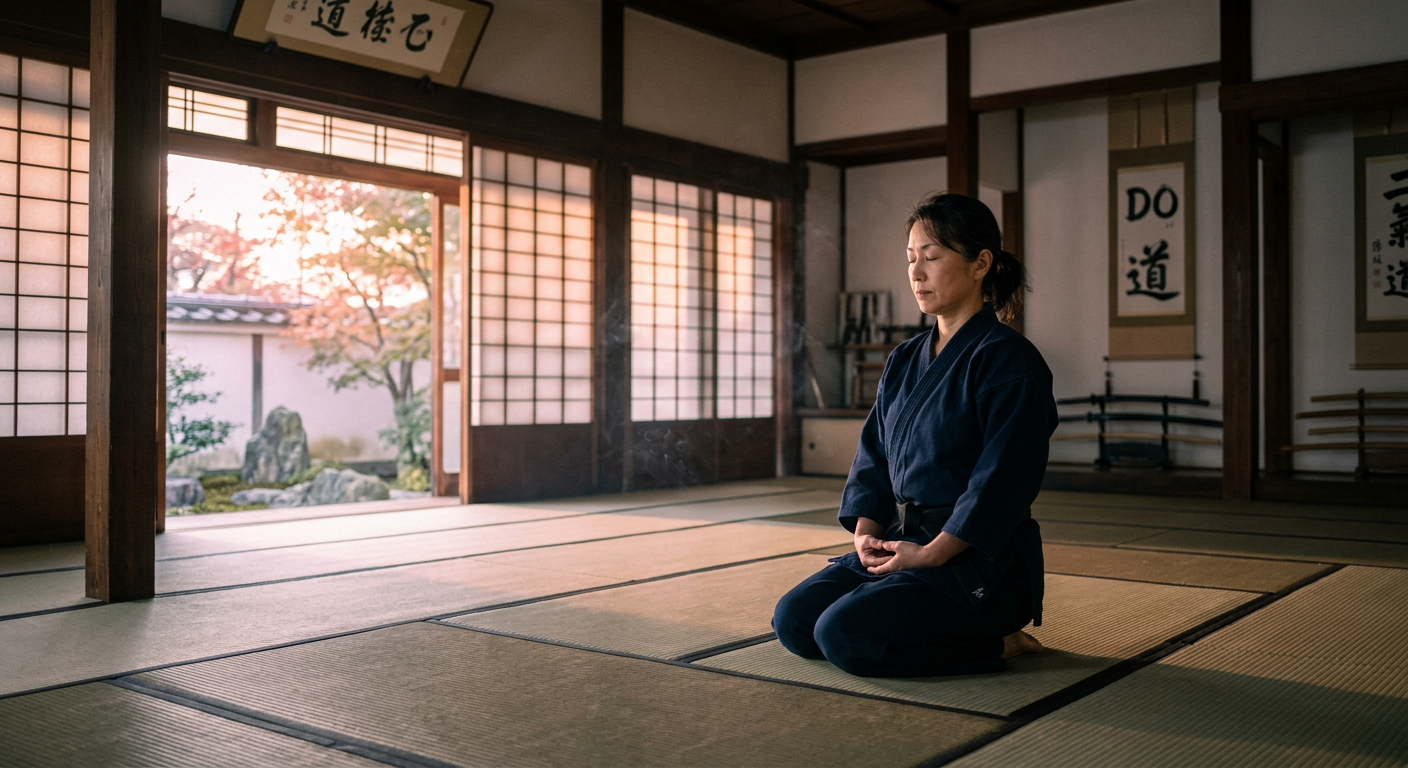
Back to top ⇧